Welcome to our monthly round-up of news and products. We update it as we go along so do check back for our latest finds. and you can subscribe to get our monthly updates delivered to your virtual door. There’s a subscription form at the bottom of the page. You can see our past round ups here HERE.
Easter
April 12th is easter and we have a few ideas to make it less plasticky including refillable eggs and plasticfree sweets. You can find them here.
But one of my favourites has to be the M&S Cheese Eggs! yes. M&S has launched a pack of six wax-covered Mini Cheesy Eggs, with Barber’s Farmhouse Cheddar as whites and a vintage 18-month matured Red Leicester yolk hand-dipped in a duck egg blue wax ‘shell’

and sold in what looks like a cardboard box. For obvious reasons I can’t get out to check.
New Phone Case
Found a company here that sells all kinds of biodegradable things and sends them a packaging free including compostable mobile phone covers which is what I’m interested in
- 0% plastic. Made from 100% plants
- Designed and produced in Sweden
- 29 vibrant designs
- 100% compostable
- Recycle your case and get a new one at any time with A Good Loop
- A Vegan Society Certified product
- Pick iPhone: 6, 6S, 7, 8, 7 Plus, 8 Plus, X, XS, XS Max
Detailed information:
- Glass Protection: Yes
- Compostable: Yes
- All cases are printed by hand - slightly variations can occur
- What inks are used: Waterbased
- Case type: Hard
- Packaging: A red Stone Paper box
- How we bring it to our warehouse: We ship in bulk without any plastics
- Transport method to warehouse: Truck & Vessel
- Factory: The Mobile Case Factory
- Climate issue addressed: Plastic-pollution
- Time to market: 12 months
- Weight: 20 grams (0.8 oz)
- How to recycle: Compostable but we ask you to use A Good Loop
- Thats a company that’s serious about accountability.
They also have pens and vegan dental floss.
And the self drying clay that comes plastic free.
They have cut a lot of the plastic out of the warehouse and transport so you know when you’re buying from them they really are trying to reduce the plastic behind the scenes as well as the stuff on the shelf.
I’ll report back.
Natural Rubber
I want some foam rubber. But of course most of it is plastic derived. Apparently there is such a thing as natural foam rubber. But first I had to do a bit more research into actual rubber. Heres what I found…..
There are two major categories of rubber; natural and synthetic. The most popular compounds are;
Natural Rubber
Vulcanised Rubber
Synthetic
History
Thousands of years BC Indians living in Central and South America were using latex to makewaterproof clothes and shoes using latex from rubber trees.
It was unknown in Europe until 1731when French explorer Charles Marie de La Condamine sent back samples of rubber to Europe. It was put to a variety of uses In 1770 Joseph Priestley found he could use pieces of rubber to erase pencil marks.
Others used it to waterproof cloth a series of discoveries that eventually led to Charles Macintosh inventing and patenting the rubberized, waterproof coat or macintosh. But it wasnt until 1839 when American inventor Charles Goodyear discovered how to vulcanize rubber that it really came into its own.
Natural Rubber
also called Latex or Para
Natural rubber is made from latex
Latex is the white liquid that oozes from certain plants when you cut into them.There are around 200 plants in the world that produce latex including dandilions.
99 percent of natural rubber comes from a tree called Hevea brasiliensis, or the rubber tree.
- Though it’s sometimes mistaken as the sap of the Hevea tree, latex actuality runs through ducts in a layer just outside the cambium below the tree’s bark.
- The rubber tree originates from South America.
- 90% of all natural rubber comes from these trees grown in rubber plantations mainly found in Indonesia, the Malay Peninsula and Sri Lanka.
- This type of rubber is often called Para rubber.
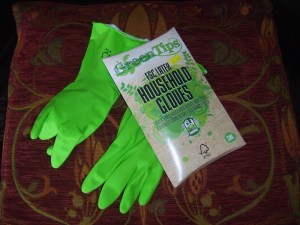
However by itself, unprocessed natural rubber is not all that useful. It tends to be brittle when cold and smelly and sticky when it warms up.
So it is combined with a range of addatives to give it added strength and flexibility.
The tough rubber used for tyres and such like has been further processed or vulcanised.
Vulcanised Rubber
Latex is filtered, washed, and reacted with acid to make the particles of rubber stick together.
Mastication machines “chew up” raw rubber using mechanical rollers and presses to make it softer, easier to work, and more sticky.
Addatives chemical ingredients are mixed in to improve its properties (for example, to make it more hardwearing).
Next, the rubber is squashed into shape by rollers (a process called calendering) or squeezed through specially shaped holes to make hollow tubes (a process known as extrusion).
Finally, the rubber is vulcanized (cooked): sulfur is added and the rubber is heated to about 140°C (280°F).
Biodegradable?
Latex when made from rubber trees a natural sounds like it should be biodegradable. Which has led to claims that that non-vulcanised products like latex condoms and other products are.
This is hotly debated!
Most latex products contain addatives to make them (amongst other things) stronger. It all depends on wether they are biodegradable or not.
While many people say that simple rubber products people do eventually decompose, (not proven), it takes such a long time as to make any claims of biodegradability misleading.Certainly the anti-balloon camp do not consider latex balloons to be biodegradable despite what the balloon industry say.
And yet this….
- Very thin rubber products, such as balloons and condoms, will degrade naturally especially if they are subjected to natural sunlight. As is evident from the problems which are associated with sealing rings natural rubber is capable of being biodegraded. It should be possible to compost thin rubber articles
- In a composting environment, biodegradation rates over 24 weeks were twice that compared to the fertilized treatment in soils. Degradation of natural rubber condoms in soil was slower compared to gloves with 42% of the initial weights remaining after 48 weeks. In contrast, the manufactured polyurethane condoms were hardly biodegradable.
It is possible to buy natural latex foam rubber. For example
100% Natural Latex, Pure Comfort, Talalay rubber not foam, offering maximum comfort and luxury, available in Soft, Medium or Firm.read more here. I
and latex sheets like these
Both of the above have been described as biodegradable.
However vulcanised rubber generally is not. Though there are some suggestions that it may eventually biodegrade more research needs to be done.
Synthetic rubber on the other hand is definitely not biodegradable.
More Stuff
Reusables
We do love a reusable product. and we have quite a collection. See them here
N.B.
lines changes, products get removed. For more information why not ask the Plastic Is Rubbish FB group for updates. They are a great source of tidbits, personal experience and the latest news. Why not join them and share the plastic free love x